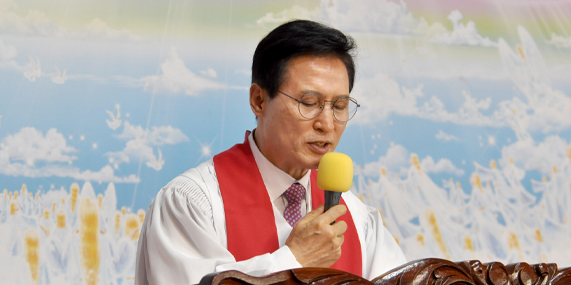
Living According to God's Will in the Midst of Chaos (Part 1)
Bible passage: Acts 21:7-14
“12. When we heard this, we and the people there pleaded with Paul not to go up to Jerusalem. 13. Then Paul answered, "Why are you weeping and breaking my heart? I am ready not only to be bound, but also to die in Jerusalem for the name of the Lord Jesus." 14. When he would not be dissuaded, we gave up and said, "The Lord's will be done. ”
Sometimes we feel confused because we don't know what God's will is.
However, there is no reason why God should not clearly communicate His will to His children. God is not a God who makes our path ambiguous so that we do not know which path is the right one. Because God the Holy Spirit has already come into our hearts, God has a perfect plan for each and every one of you here, and He is leading you according to that plan. Nevertheless, we sometimes find it difficult to discern God's will and are confused because we do not know clearly what God wants.
Today's scripture tells the story of Apostle Paul's four missionary journeys throughout his life. This happened when he was returning to Jerusalem after completing his third missionary journey before being taken to Rome as a prisoner. However, strangely enough, many of the co-workers around Apostle Paul stopped him from going to Jerusalem. They were not people without faith, but people who prayed a lot and helped Apostle Paul a lot. When Apostle Paul arrives in Jerusalem, he has to prepare for his fourth missionary trip to Rome, but the people around him were trying to dissuade him from going to Jerusalem because there would be danger and tribulation there.
The reason they told Apostle Paul not to go to Jerusalem was because they were moved by the Holy Spirit. Verse 4 says, “We sought out the disciples there and stayed with them seven days. Through the Spirit they urged Paul not to go on to Jerusalem.” Apostle Paul is diligently going to Jerusalem, driven by the Holy Spirit, but his co- 2 workers around Paul are also moved by the same Holy Spirit and are telling Apostle Paul not to go to Jerusalem. How on earth are we to understand this contradiction? The co-workers around him also said, “If Apostle Paul goes to Jerusalem, he will be bound and suffer tribulation.” Everyone heard the same voice of the Holy Spirit: So, the Apostle Paul said, “You said Do not go to Jerusalem. If I go, it will be a big problem. It's not our word. The Holy Spirit spoke.
He told me that if I go, I would be bound and suffer hardships.” However, Apostle Paul did not accept their advice and eventually went to Jerusalem. Verse 13 of the scripture says, “Then Paul answered, “Why are you weeping and breaking my heart? I am ready not only to be bound, but also to die in Jerusalem for the name of the Lord Jesus.”” Apostle Paul also heard the voice of the Holy Spirit, and his fellow workers around him also heard the same voice of the Holy Spirit, but there was confusion as their opinions differed.
The issues of prophesying, hearing the voice of the Holy Spirit, and discerning what God's will is, are truly precious, but can sometimes cause confusion in the church. Today’s sermon addresses this issue. As I briefly mentioned two weeks ago, I would like to talk about prophecy, listening to the voice of the Holy Spirit, and discerning God's will through this scripture. I hope that believers will listen carefully, stand firm in the Word, distinguish God's will in everything, and lead an unwavering life of faith.
1. Even though they heard the same voice of the Holy Spirit, the reason why there was confusion between Apostle Paul and his co-workers was because of differences in how they heard the voice of the Holy Spirit or prophecy and interpreted it. The voice of the Holy Spirit that Apostle Paul heard is shown in Acts 20:23. Acts 20:23 says, “I only know that in every city the Holy Spirit warns me that prison and hardships are facing me.” The co-workers around him also heard the voice of the Holy Spirit with the same message. The content they heard was the same, but their thoughts on understanding and interpreting it were different. Additionally, while Apostle Paul was staying at Deacon Philip’s house, a prophet named ‘Agabus’ came from Judea and made a prophecy.
He took Paul's belt, bound his hands and feet tightly with his belt, and said, “The Holy Spirit says, ‘In this way the Jewish leaders in Jerusalem will bind the owner of this belt and will hand him over to the Gentiles.’” In this way, even the prophet Agabus came and prophesied with the voice of the Holy Spirit, and all the people who had followed Apostle Paul to this point were now crying and actively blocking Paul's path. With tears pouring down their face, they said, “Apostle Paul, please don’t go. We are really begging you; this is not the right path. God also prophesied, so please do not go to Jerusalem,” they said, actively dissuading him. It was true that the co-workers around him and the prophet Agabus were also touched by the Holy Spirit.
The Holy Spirit clearly told Apostle Paul that if he went to Jerusalem, he would be bound and suffer. But the problem was that there was no clear word on what to do, so differences of opinion arose and confusion arose. The people around Apostle Paul took it as a sign not to go. The interpretation was, “The reason God forewarned us in advance that there would be tribulation and persecution was to tell us not to go to Jerusalem. It is clearly God who is blocking it.” 4 However, Apostle Paul's interpretation was different. Apostle Paul also knew that if he went to Jerusalem, he would be bound and suffer hardships. He know this, but it was still God’s will for him to go to Jerusalem. Verse 13 says, “Then Paul answered, “Why are you weeping and breaking my heart? I am ready not only to be bound, but also to die in Jerusalem for the name of the Lord Jesus.”” It is not because he does not know that tribulation and suffering await him, but he does not fear it even though he knows it, but he interprets it as God's will to go boldly to Jerusalem.
Apostle Paul interpreted that God was speaking to him as follows: “Paul! When you enter Jerusalem, you will be bound and in trouble by the Gentiles. At this time, don't feel strange, as if something strange has happened to you. When faced with bondage and tribulation, never be afraid or run away. Rather, rejoice even if you are proudly bound and suffer hardships. There is work for you to do through bondage and tribulation. That’s why I’m telling you in advance.” Only then did Prophet Agabus and other co-workers around him understand God's will in giving the prophecy through the voice of the Holy Spirit and said in verse 14, “The Lord’s will be done.” According to the Bible in 1 Corinthians 12:10, one of the gifts of the Holy Spirit is the gift of prophecy. So, receiving the gift of prophecy is biblical.
It is the gift of prophecy because God lets us know in advance what will happen in the future about a person, church, or country, so there is no problem in itself. However, what to do with it in the future, that is, knowing God's will, is a more important issue. God equally informed Apostle Paul and those around him that if Apostle Paul went to Jerusalem, he would be bound and suffer tribulation. 5 However, a more important issue than knowing ‘what is being told’ is knowing ‘why it was being told.’ In other words, it is important to correctly interpret the meaning of the prophecy and know exactly what is God's will to do. “Apostle Paul, if you go to Jerusalem, you will be in big trouble.
Do not go,” the Holy Spirit did not tell them in advance to block the road to Jerusalem. God had a plan to expand the Gospel by sending Apostle Paul to Jerusalem and from there to Rome, but Paul's co-workers and the prophet Agabus did not know this, and simply listened to the prophecy, crying and crying, following Apostle Paul's path. If they block them, it would be a huge hindrance and obstruction to God's work. Even though we hear the same voice of the Holy Spirit, just as confusion arose between Apostle Paul and his fellow workers, the problem is not solved by simply hearing the Holy Spirit's voice or prophecy, but by receiving the grace and power to interpret God's will correctly. You must receive this ability to interpret God's will correctly.
2. Then why does God give us a prophecy that can cause such confusion? What is the purpose of giving prophecy? In Verse 15 of the scripture, Apostle Paul does not listen to the prophecies of his fellow workers and the prophet Agabus, but unwaveringly goes to Jerusalem as he himself heard and interpreted the voice of the Holy Spirit. Then, why did God not prophesy only to Apostle Paul through the voice of the Holy Spirit, but instead told it to many people, causing such confusion and making things complicated?
This was NOT to tell people to fight and argue with each other, claiming that the prophecy they received was correct, but instead to pray in advance so that they could handle it well because something like that would happen in the future.
When Apostle Paul goes to Jerusalem, he would be bound and suffer hardships. God was telling them to pray for Apostle Paul so that he would not become weak 6 or waver in the face of such hardships, but could boldly walk the path God wants him to take. In the Gospel of Mark, before Jesus carries the cross, He informs His disciples three times in advance that He will carry the cross in the future; He prophesied.
The first is Mark 8:31, the second is Mark 9:31, and the third is Mark 10:33-34. These are called ‘The three passion predictions of Jesus’. Then why did Jesus tell them in advance that He would suffer and be abandoned, that He would be killed, and that He would rise again after three days? Did He inform them to stop Him from carrying His cross? Was He telling them in advance to be prepared to fight and defeat the Jewish soldiers when they come for them? That is not the case. He told them in advance that such an incident of cross suffering would occur in the future and that they should pray so that they would not fall into temptation at that time.
But what did the disciples do? The prophecy of Jesus' suffering on the cross was put to shame, so they did not pray and only argued about who was higher. Peter, in particular, was so full of his own thoughts that he cried out, “Lord! You must never bear a cross,” but instead, Jesus rebuked him by saying, “Get behind me, Satan! You are a stumbling block to Me; you do not have in mind the concerns of God, but merely human concerns.” Still, he couldn't come to his senses. After not following the teachings, when Jesus was arrested and interrogated at the high priest's house, Peter denied knowing Jesus three times and all the disciples ran away. There are many times when prophetic prayer becomes a problem in the church.
It is not the prophecy itself that is the problem, but the prophetic prayer that is the problem. Sometimes the person who prays prophetically becomes a problem, and the person who receives the prophetic prayer also sometimes becomes a problem. Why is that so? The problem is that people who have been given the gift of prophecy by God first teach them what will happen in the future for individuals or churches, and they too easily pass on the prophecy they received from God to others. They go to people or call them saying, “I need to tell you this quickly. Be careful. God showed me this about you” or “This is what will happen in our church in the future.” The problem is spreading the word, “God told me through a dream.” God is not showing us in advance in order to spread words or spread rumors like this. Most of the time, when God informs or shows us in advance, prayer is necessary.
It is given to you so that you can pray. “Pray quietly. I have told you in advance that you should pray for that person or for the church.” He gives us the mission of prayer. He gives us the mission of intercessory prayer. However, people who see or know something in advance say it too easily, which causes confusion, tests, and problems. In today’s scripture, we see that people around Apostle Paul said, “I heard it too. Did you hear that too? I heard that person too.” They didn't pray and were just talking to each other. But what about Apostle Paul? Despite hearing the voice of the Holy Spirit with deeper inspiration, he said nothing, and proceeded to Jerusalem in silence, praying. Because of the talkative people, what would have happened if Apostle Paul had become weak-hearted and did not go to Jerusalem? God's plan would have been thwarted and only the enemy, the devil, would have applauded and been happy. In Chapter 37 of Genesis, the story of Joseph's dream appears.
When Joseph was still a young boy, God gave him two dreams. One was a dream in which he was binding grain in the field and his brothers' sheaves stood around him and bowed to his sheaf, and the other was a dream in which the sun, moon, and eleven stars, meaning his parents and older brothers, bowed to him. The fact that he had the same dream not once but twice in a row means that it was a dream given to him by God, because he said that two is a ‘number of evidence.’ So, what did Joseph do wrong that, even after having such a good dream, he was sold into slavery in Egypt by his own brothers, contrary to his dream? The dream that God gives is a dream that God gives us to pray for. It is not given to you to inform, speak, and spread to those around you.
This is the purpose of God giving Joseph dreams. “Joseph, from now on I will bless and use you as a person who is superior to your brothers. Until this comes true, cultivate your character and pray to have strong faith in Me.” But Joseph, who did not know this, was itching to boast about his dream, so he could not bear it and opened his mouth rashly in front of his father and brothers and talked about every detail. What was the result? As recorded in Genesis 37:8,11, the brothers who heard the story of Joseph's dream asked, “Do you intend to reign over us? Will you actually rule us?” Because of the dream and his words, they hated Joseph even more and became filled with envy and jealousy. 9 If Joseph had prayed alone with the dream God gave him in his heart, God would have saved Joseph from suffering and the valley of tears, and would have worked in a better way so that he could become the prime minister of Egypt. When it comes to things seen in visions or dreams, the person who saw or heard them should silently pray for intercession alone so that the person concerned can lead a good life of faith without being tempted. In Luke 22:31-32, Jesus is showing the example; He said, “Simon, Simon, Satan has asked to sift all of you as wheat.
But I have prayed for you, Simon, that your faith may not fail. And when you have turned back, strengthen your brothers.” The saying is that Satan tried to overthrow Peter, but Jesus interceded in advance to prevent Peter's faith from failing, so he was able to break the devil's scheme without falling into temptation.
3. Since prophecy has the potential to cause confusion, those who have received the gift of prophecy must be careful not to fall into the deception of the enemy devil. In a certain church in Korea, there was a deaconess who was a lifelong ‘prayer leader’ and who always prayed early in the morning and fasted once a week. One day, she was so sick that it was difficult to go to early morning prayer. At that time, she was still half-asleep, but someone shook her awake and told her to go to early morning prayers. When she opened her eyes, she saw an object passing by. The deacon thought the object was an angel and grabbed it, saying, “What if you just leave?” Then the object looked back, and it turned out that it was not an angel but a devil. Without answering, it just smiled sinisterly and walked away. The deaconess was surprised. “No? How on earth the devil wakes me up to pray early in the morning?”
After coming to her senses, the deaconess said that even though her body was sick, she went to the early morning prayers and prayed and realized that she had always had such an evil heart. “No, why don’t the elders in our church pray? Father! Please allow the elders of our church to pray. How do pastors minister without fasting? How can believers lead a good religious life without early morning prayers? Father! Please make them all repent and pray early in the morning like me.” It is said that he realized that he had become deeply prideful without realizing it and repented in tears. Of course, it is good to pray early in the morning, but isn't it more important what kind of heart you pray with? On the one hand, the devil made the deaconess keep praying, and on the other hand, she very cleverly filled the person with the devil of pride. In 1 Corinthians, the Apostle Paul explains that this is not a strange thing, and that Satan disguises himself as an angel of light and deceives the believers like an angel.
2 Corinthians 11:13-15 says, “For such men are false apostles, deceitful workers, disguising themselves as apostles of Christ. No wonder, for even Satan disguises himself as an angel of light. Therefore it is not surprising if his servants also disguise themselves as servants of righteousness, whose end will be according to their deeds.”
In this way, the enemy devil cleverly deceives and deceives those who claim to prophesy as if they were angels or the Holy Spirit giving prophetic words. When I was at the main church in Seoul, I heard this story from a friend pastor. There was a female deacon in the parish he was in charge of.
She said that she often heard voices in her heart and had asked for counseling to discern whether these are the voices of the Holy Spirit or something wrong. I asked him what voice she was hearing. The friend pastor said she heard a voice in her heart saying, “Read the Bible. Today we must go to the Daniel Prayer meeting and be filled with the Holy Spirit. Instead of doing anything else today, you should go to church and serve. You should love, and not hate.” She said she often heard voices like this. At the same time, he said, “I don’t think there’s anything wrong with you, Deaconess.
Even on the outside, she was very humble, and the voices she heard were not bad, and she only heard good voices such as ‘Read the Bible, pray, love, and practice your faith diligently,’ so I don’t think there is anything wrong with her.” When I heard this story, I was very concerned and told my friend pastor, “No. Something seems wrong. The Holy Spirit is not someone who whispers and tells you to do this or that. That’s what ghosts do. At first, only good words are told to make people believe like the voice of the Holy Spirit. Now the ghost is disguising itself as an angel of light and is deceiving the female deacon into believing that it is the work of the Holy Spirit. “If she does that and later believe and accept the work of the devil as the work of the Holy Spirit, then she will be completely possessed by the devil. ”
I said Sure enough, she seemed to be gracious at first, but later she gradually deteriorated, not obeying God's words, not accepting the advice of the pastor in charge, not being able to become one with the members around her, and only listening to the whispering voice of the devil in her heart, and gradually following it. She became strange and ended up being possessed by a demon, unable to live a proper religious life, slandering the church, and eventually leaving the church. That's right; the enemy, the devil, and ghosts pretend to be angels of light, and at first, when you pray, you receive an answer, and when you prophesy, they make the prophecy come true. You can hear a voice in your heart as if you were hearing the voice of the Holy Spirit, whispering a voice into your ear. Then, these kind of people gradually stop listening to the words of servants of the Lord, fail to reconcile with the believers, break order, deceive believers who are weak in faith, cause them to stumble, and make the church in difficulty. Apostle Paul talks about three elements that can make a true prophecy in 1 Corinthians Chapter 14.
1 Corinthians 14: verse 3, “But the one who prophesies speaks to people for their strengthening, encouraging and comfort.” In order to be a true prophecy, it must edify the church, bring joy and peace to people, benefit the soul, bear good fruit in the life of faith, and become an example to all people. Some people may say, “Still, I received the prophetic prayer and it came true as prophesied.” However, if you received a prophetic prayer and it really came true, it would actually be a bigger deal from then on. Because from then on, whenever something happens, that person goes to the person who has the gift of prophecy and asks them to shave their head and pray.
God's word also becomes useless. The senior pastor’s advice also becomes useless. Only those who prophesy become the most important. Therefore, they are unable to reconcile with the believers and end up wandering around the church and falling into disrepair. God does not lead believers this way. God is not pleased with relying on people instead of relying on Him. There is a terrible temptation that people who prophesy fall into. He is trying to tie people to himself by saying, “I have the gift of prophecy; If I pray, I can see your future,” he says this, and wants everyone to come to him. It's so nice when people only look at themselves like this. When people move away from him, he feels so empty. From then on, he starts going to increasingly strange places to tie people to himself.
God is not pleased with things like predicting our future. If prophets try to use their gift of prophecy in this way, they have already been deceived by the devil. Predicting the future is the devil's specialty. That's why there is a saying called fortune teller. God commanded in Exodus 22:18 to kill the fortune-telling shaman. We must be very careful not only about making prophecies through dreams or visions, but also about receiving prophetic prayers. If you carelessly receive prayers from someone who has received the wrong spirit, that spirit will be transferred into you. That is why 1 Corinthians 14:29 says that prophecy must be discerned. It says, “Two or three prophets should speak, and the others should weigh carefully what is said.” God placed the senior pastor as the spiritual leader of the church. The senior pastor is responsible for discerning all spiritual issues in the church and managing souls well.
Therefore, when believers in the church engage in spiritual work, such as prophecy, speaking in tongues, or interpreting dreams, it is their duty and responsibility to receive guidance and management from the senior pastor. In two places in the Bible; 1 Corinthians 12:28 and Ephesians 4:11, the positions established by God in the early church are listed. In summary, He said to be an apostle, prophet, evangelist, pastor, teacher, with power, gift of healing, helping one another, and speaking in various tongues. Among these, there are five positions in the church: apostle, prophet, evangelist, pastor, and teacher. The remaining five are not positions but refer to spiritual activities within the church. However, among these, the offices of apostle and prophet were offices that existed only for a short time in the early church, and have disappeared in the modern church after the medieval Catholic era and the Religious Reformation. In Kenya, which is unaware of this fact, there are still apostles and prophets, but we must realize that this is a mistake due to ignorance of the Bible and the history of the church.
Please keep in mind that in the modern church there are ‘sent ones’ but no office of apostle, and that there is prophecy or the gift of prophecy but no office of prophet. In modern churches, God has given the senior pastor the responsibility to govern and manage the church. We hope that all members of our church will have spiritual discernment and live a healthy life of faith under the discipline and guidance of the senior pastor, and become believers who live according to God's will even in the midst of chaos. Since I don't have time today, I will end the sermon here and next time I will preach on the same topic for another hour and talk about church duties in more detail. - END -